The 2026 Consumer Dispute Index: America's Most-Complained-About Companies (Mid-Year Edition)
Meta is the company Americans take legal action against most. Not Walmart, which serves 255 million shoppers a week. Not Amazon, which ships to almost every home in the country. Meta. A company most people never pay a dollar to directly. And it tops the list.
That comes from our 2026 Consumer Dispute Index: Mid-Year Edition. We looked at thousands of real small claims disputes. All were started through PettyLawsuit from January through early August 2026. These are not online reviews or BBB complaints. Each data point is a real person. Someone mad enough to name a company and start a legal case.
Here's who made the list. And what it says about how big companies treat you.
Key Findings
- Meta is the most-disputed company in America. Its Dispute Index score is 100. Second-place Walmart scores 56.
- Gig apps are a giant combined force. Uber, DoorDash, and Lyft together score 99, nearly matching Meta alone.
- Fintech apps that freeze your money (Cash App, PayPal, Venmo, Chime) combine for a score of 77.
- About 70% of disputes in our data resolve without anyone going to court.
The Top 25 Most-Disputed Companies of 2026 (So Far)
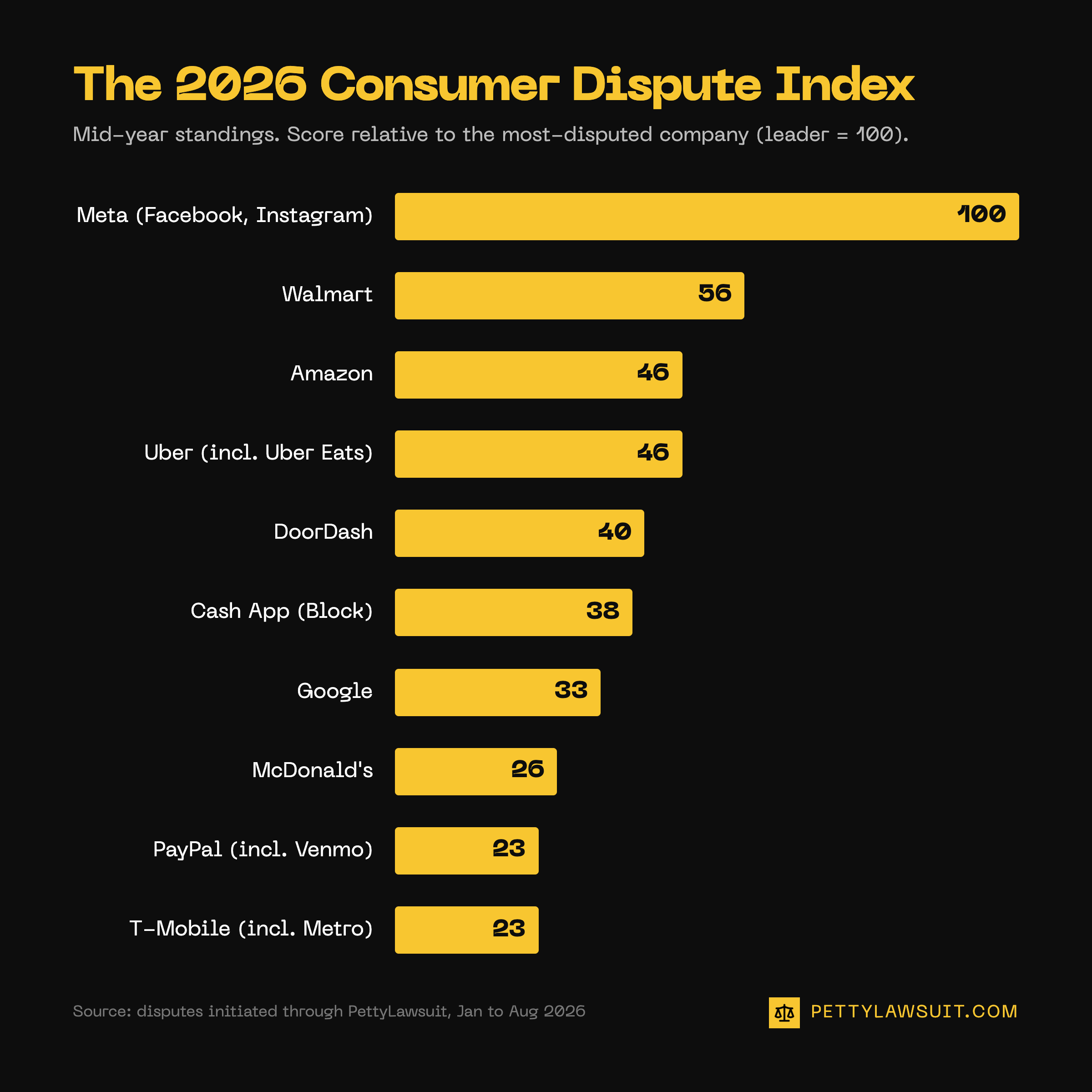
Each company gets a score. The most-disputed company is set to 100. A score of 50 means half as many disputes as the leader.
Scores combine all name spellings for each company. "Walmart Inc.," "Walmart," and "Walmart Supercenter" count as one. Full methods note at the bottom.
| Rank | Company | Dispute Index Score |
|---|---|---|
| 1 | Meta (Facebook, Instagram) | 100 |
| 2 | Walmart | 56 |
| 3 | Amazon | 46 |
| 3 | Uber (incl. Uber Eats) | 46 |
| 5 | DoorDash | 40 |
| 6 | Cash App (Block) | 38 |
| 7 | 33 | |
| 8 | McDonald's | 26 |
| 9 | PayPal (incl. Venmo) | 23 |
| 9 | T-Mobile (incl. Metro) | 23 |
| 11 | AT&T | 21 |
| 12 | Airbnb | 19 |
| 13 | Chime | 16 |
| 14 | Verizon | 15 |
| 15 | Lyft | 13 |
| 16 | Temu | 12 |
| 16 | eBay | 12 |
| 18 | United Airlines | 11 |
| 19 | American Airlines | 10 |
| 19 | UPS | 10 |
| 21 | Dollar General | 9 |
| 21 | Frontier Airlines | 9 |
| 21 | TikTok | 9 |
| 21 | Public Storage | 9 |
| 25 | Apple | 8 |
Think of these as the halftime standings. There are five months left in 2026. The year-end update will show who climbed and who fell.
Why Meta Wins by a Mile
Meta isn't just first. Meta laps the field. Its score nearly doubles Walmart's.
Here's the strange part. You don't buy groceries from Meta. You don't ride in a Meta. So what are people fighting about?
Locked accounts. Business pages shut down. Hacked profiles nobody will help you get back. Ad accounts frozen with money still sitting in them. Small business owners build their whole following on Instagram. Then they lose it overnight. No reason given. No human to call.
That's the pattern. It's not about a bad product. It's what happens when a company controls something you need. And there's no way to reach a person when things go wrong. When support is a dead end, small claims court becomes customer service.
The Customer Service Void Theory
Look at the top ten again. Meta. Uber. DoorDash. Cash App. Google. PayPal.
What do they have in common? Try calling them. We'll wait.
Look who sits at the top of this index. These are companies where you can't reach a human. Walmart and McDonald's earn their spots through sheer volume. Millions of sales a day. The tech and fintech names got here a different way. They serve hundreds of millions of people. Their support systems are built to never talk to any of them.
A frozen Cash App balance. A deactivated Uber account. A Google ads billing error. In each case, real money is on the line. And a chatbot stands between you and it. Small claims court is often the first place they have to act human.
The Gig Economy Is Its Own Category
Add up Uber (46), DoorDash (40), and Lyft (13). Together they score 99. That's a near tie with Meta for the top spot.
Gig disputes are a different beast. These are workers, not customers. The most common stories:
- Cut off with no explanation. A driver with years of history and a high rating gets shut down overnight. Their income is gone. No appeal ever reaches a human.
- Missing or wrong pay. Missing bonuses, disputed fares, promos that never paid out.
- Held funds. Earnings frozen during "reviews" that drag on for weeks.
One driver who used PettyLawsuit had more than 10,500 trips before he was cut off. He didn't shrug it off. He took action and settled for $7,500. In that spot yourself? We wrote a full guide on what to do when Uber, Lyft, or DoorDash cuts you off.
Fintech: Where Your Own Money Gets Held Hostage
Cash App (38), PayPal and Venmo (23), and Chime (16) combine for a score of 77. That would rank second all by itself. And these disputes all rhyme. An account frozen without warning. A balance held for months. A fraud claim denied with no real review.
Real banks have to follow strict dispute rules. Fintech apps live in a grayer zone. Their customers feel it. The app holding your paycheck locks you out. Support sends canned replies. At that point, the legal system is often the only lever you have left.
Airlines, Telecom, and the Rest of the Usual Suspects
- Airlines: United (11), American (10), Frontier (9), and Delta (8) combine for 38. Refunds never issued. Vouchers instead of cash. Damaged bags. Canceled flights with no payout.
- Telecom: T-Mobile (23), AT&T (21), and Verizon (15) add up to 59. Billing fights. Promo credits that never showed up. Early exit fees. Trade-in credits that vanished.
- Shipping: UPS (10), FedEx (8), and even the US Postal Service (6) make the list. Lost and broken packages. Claims that went nowhere.
- Storage: Public Storage (9) and Extra Space Storage (4) show up for sold-off units, sudden rate hikes, and damaged goods.
What This Data Actually Means
A few honest notes. This index counts disputes filed through one platform. So it reflects who our users are: regular people with claims usually under $12,500. It's not a perfect ranking of who behaves worst. Bigger companies naturally get more disputes.
But that's what makes the Meta number so striking. Meta has no cash registers. No deliveries. No rides. People aren't fighting Meta over purchases. They're fighting for access to their own digital lives and income.
The bigger takeaway: every company on this list settles cases. Most small claims disputes never see a courtroom. A formal notice, steady follow-up, and a real court deadline get answers. Support tickets never will. About 70% of disputes in our data end without anyone seeing a judge. And if the first notice gets ignored, there's a playbook for that too.
Can You Really Take a Giant Company to Small Claims Court?
Yes. This is the part most people don't know.
Small claims court was built for exactly this. You don't need a lawyer. Filing fees run $30 to $75 in most states. Claim limits run from $2,500 to $25,000, depending on the state. And here's the kicker. In most states, companies can't send their legal team to small claims court. Many send no one at all. That can mean a default judgment for you.
Big companies know the math. Flying someone to a courthouse in Ohio over an $800 dispute costs more than $800. That's why so many of these cases settle after the first formal notice. We even wrote the exact steps for big names, like how to take Amazon to small claims court.
How We Built This Index
This index is based on defendant names from thousands of disputes. All were started through PettyLawsuit between January 1 and early August 2026. A full-year update comes out in January 2027. We grouped different spellings under one brand. For example, "Block, Inc. d/b/a Cash App," "Cash App," and "CashApp" count as one entry. Facebook and Instagram roll up to Meta. We removed people, unknown defendants, and entries we couldn't identify. Each company's score is measured against the leader. The leader is set to 100. Scores reflect disputes started. They are not judgments or proof of wrongdoing by any company listed.
FAQ
What company has the most consumer complaints in 2026?
Meta (Facebook and Instagram) tops PettyLawsuit's dispute data with a score of 100. That's nearly double Walmart at 56. Most Meta disputes are about locked accounts, shut-down business pages, and frozen ad accounts.
Can you sue Facebook or Meta in small claims court?
In many cases, yes. Small claims court handles money disputes up to your state's limit. People have brought claims over shut-down ad accounts and lost business access. Terms of service can affect where and how you file. So check yours.
Can you sue Cash App if they hold your money?
People do it all the time. Frozen balances and denied fraud claims come up over and over in our data. A formal demand with a court deadline often gets a reply when support tickets fail.
How much does it cost to take a company to small claims court?
Filing fees range from about $15 to $75, depending on the state and claim size. You don't need a lawyer. In most states, companies can't bring their lawyers either.
Do big companies actually settle small claims cases?
Most of the time. Fighting a small claim usually costs more than settling it. About 70% of disputes in our data resolve without a court hearing.
What do people sue gig companies like Uber and DoorDash for?
The most common gig disputes are sudden account shutdowns, missing pay, and funds held during long reviews.
Got a company on this list holding your money? Don't shrug it off. PettyLawsuit helps you send a formal notice, keep the pressure on, and file in court if it comes to that. Most cases never do.